
The median purchasing power on Bonaire, St Eustatius and Saba increased in 2024. On Bonaire, households gained 13.7 percent, on St Eustatius 10.8 percent and on Saba 10.4 percent, year on year. Around 75 percent of the population saw an improvement. Single-parent families and households reliant mainly on benefits saw the largest increase. This is according to figures from Statistics Netherlands (CBS).
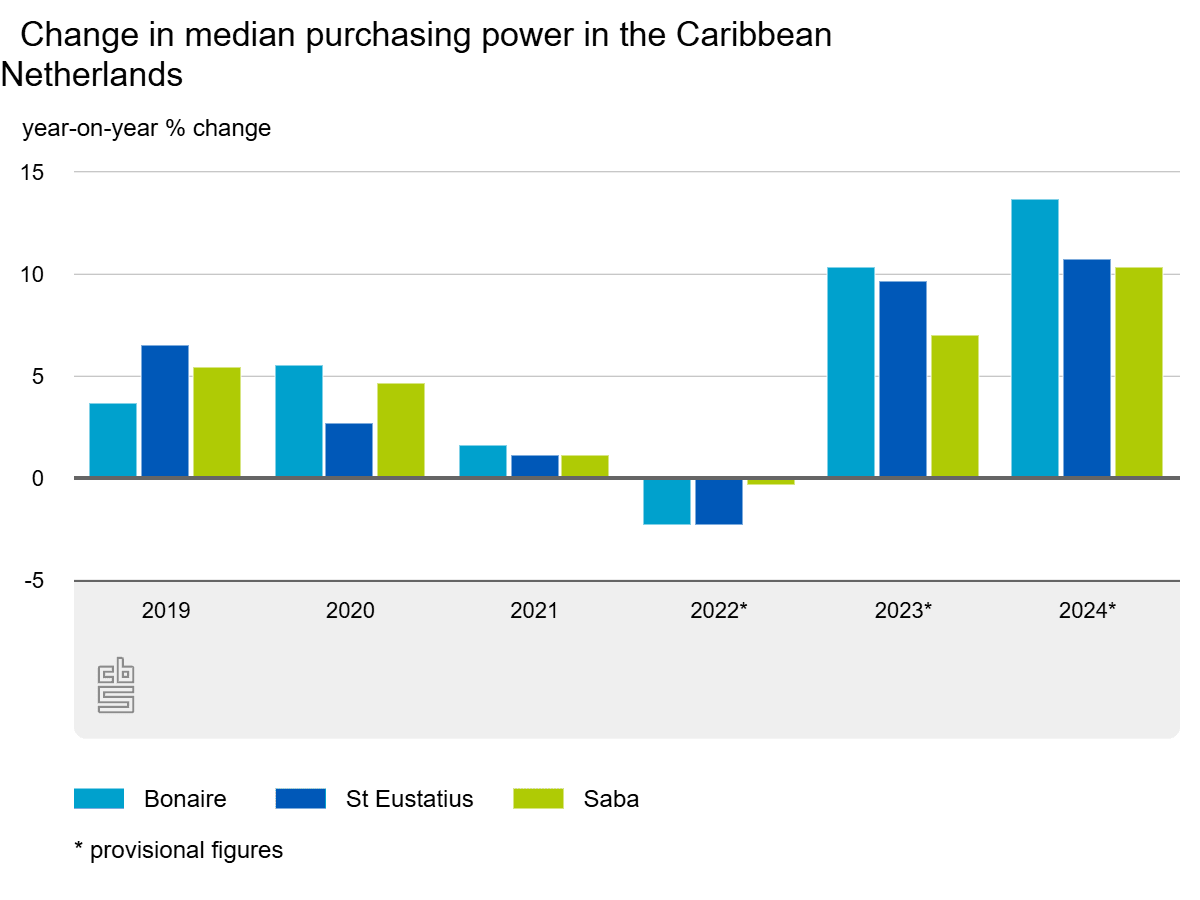
Image: © CBS
On the advice of the Social Minimum Commission, the government has introduced a number of measures to improve purchasing power from 2023 onwards in order to strengthen the sense of economic security in the Caribbean Netherlands. For example, the Statutory Minimum Wage (WML) was increased twice in 2024. Benefits under the General Old Age Pension (AOV), the General Widows’ and Orphans’ Act (AWW) and income support were also increased. These measures led to a rise in purchasing power for both people in employment and recipients of benefit.
On Bonaire, the median purchasing power for households reliant on benefits as their main source of income improved by the most, by 21.8 percent. On St Eustatius and Saba, it increased by 17.1 percent and 10.7 percent, respectively.
As a result of the increase in benefit payments, the situation for nine out of ten people in households reliant mainly on benefits for their income has improved. On Bonaire, the purchasing power of people in employment rose by 13.2 percent, on St Eustatius by 10.5 percent and on Saba by 10.2 percent. Over 90 percent of residents of the Caribbean Netherlands are members of households that derive their income primarily from work.
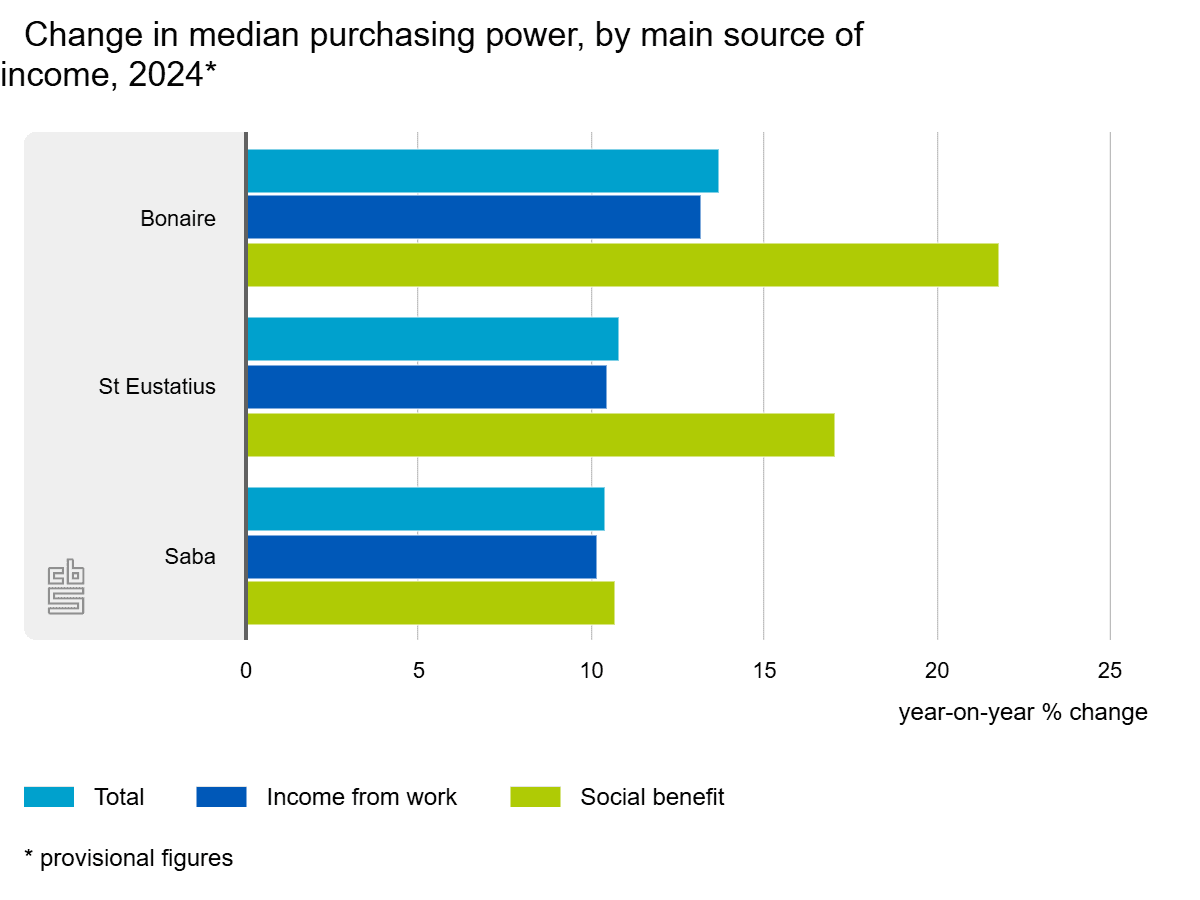
Image: © CBS
Single-parent families gained the most
In 2024, the median purchasing power rose for all households, but particularly among single-parent families. On Bonaire, purchasing power for this group improved by 19.0 percent, partly due to the increase in child benefit. On St Eustatius and Saba, single-parent families saw their position improve by 18.4 percent and 15.9 percent, respectively. On St Eustatius, one-person households saw the smallest increase, at 5.6 percent.
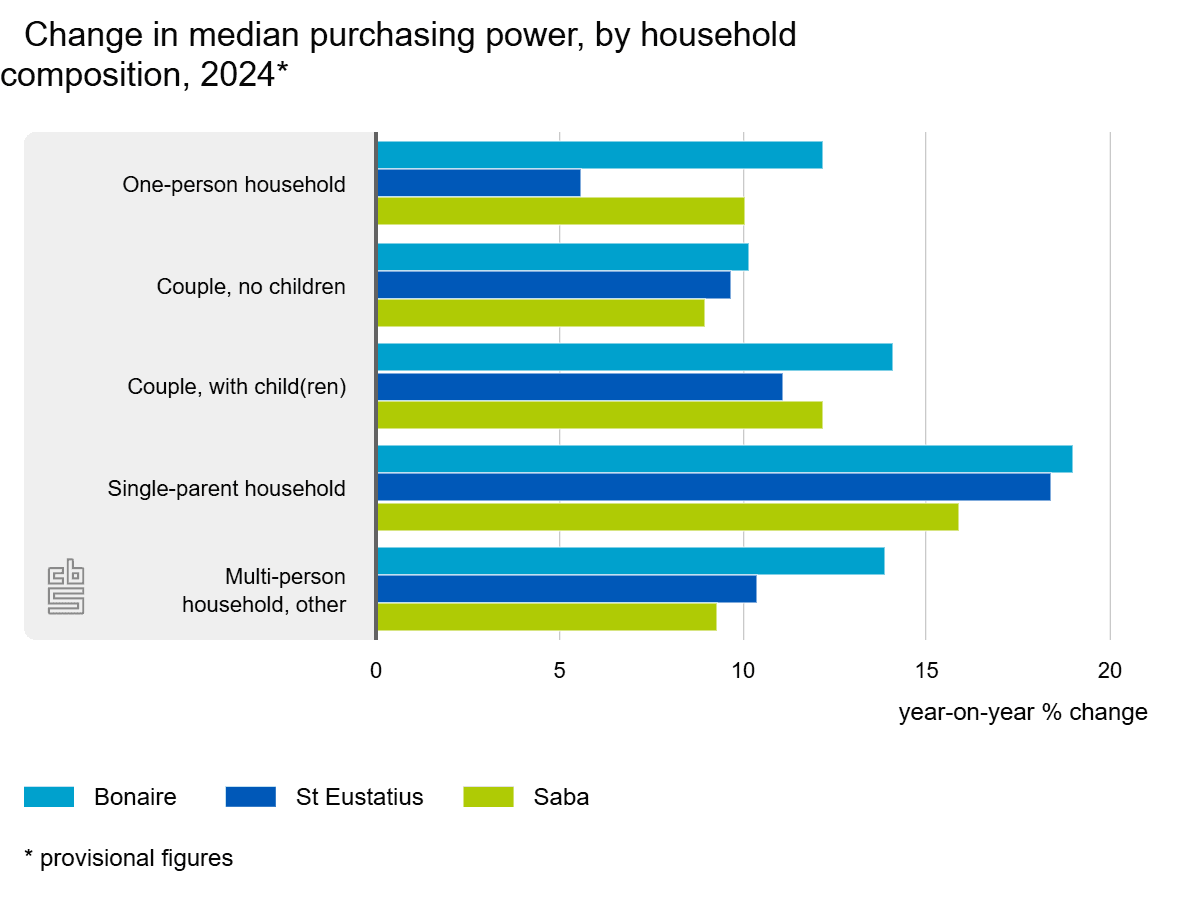
Image: © CBS
Increase in purchasing power across all age groups
In 2024, purchasing power among households rose across all age groups. The largest increase was seen among residents of Bonaire with a main breadwinner aged below 40, at 16.1 percent. They are more likely than average to work in sectors where wages are around the minimum wage level and therefore benefit from increases in the minimum wage. On St Eustatius, young people saw their position improve by 11,6 percent and on Saba by 12.0 percent. Among older people, purchasing power rose mainly due to the increase in the General Old Age Pension (AOV).
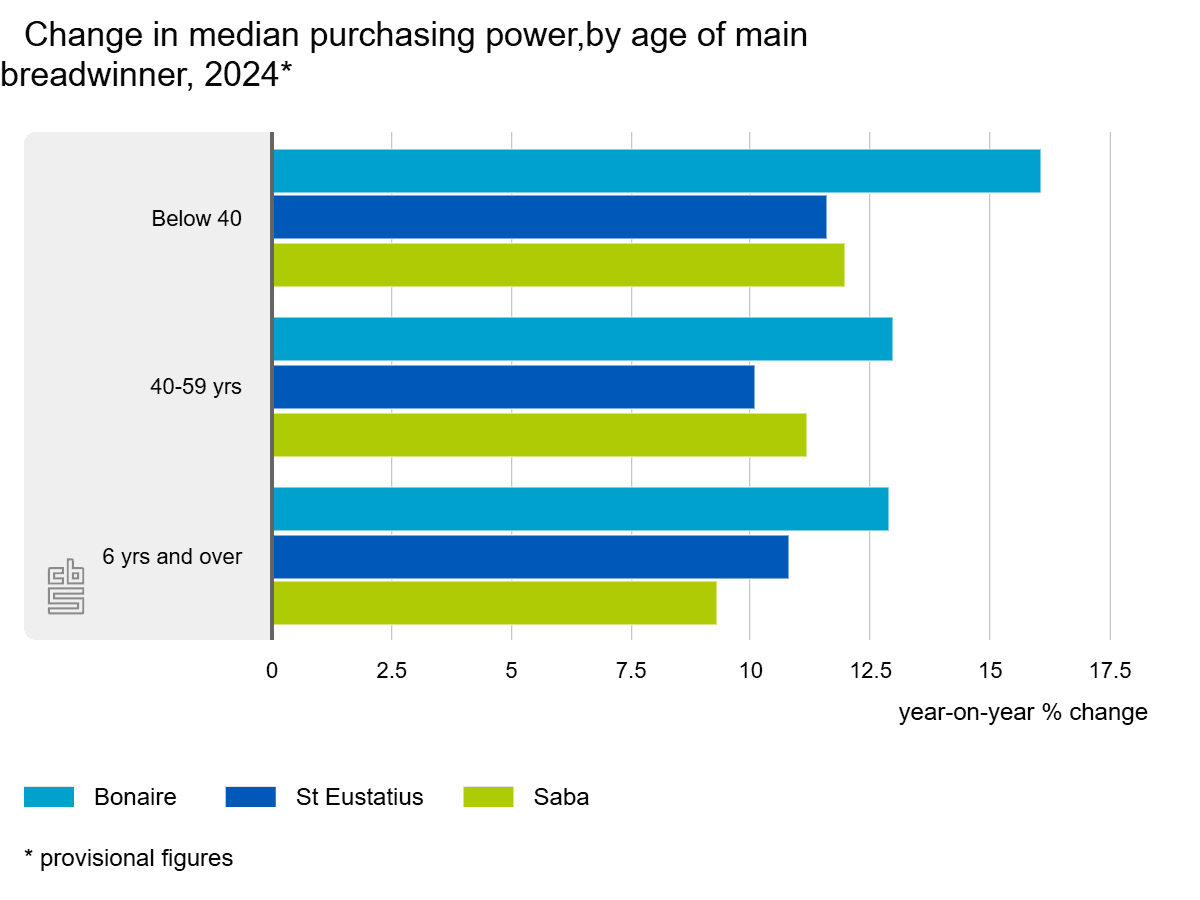
Image: © CBS
Largest increase among low income-households
The biggest improvements were seen among lower income households. On Bonaire, purchasing power rose by the most among low-income households, by an average of 19.4 percent. On Saba, low-income households in particular also benefited from the 16.1 percent increase in purchasing power. Purchasing power also improved among other income groups, but to a lesser extent.
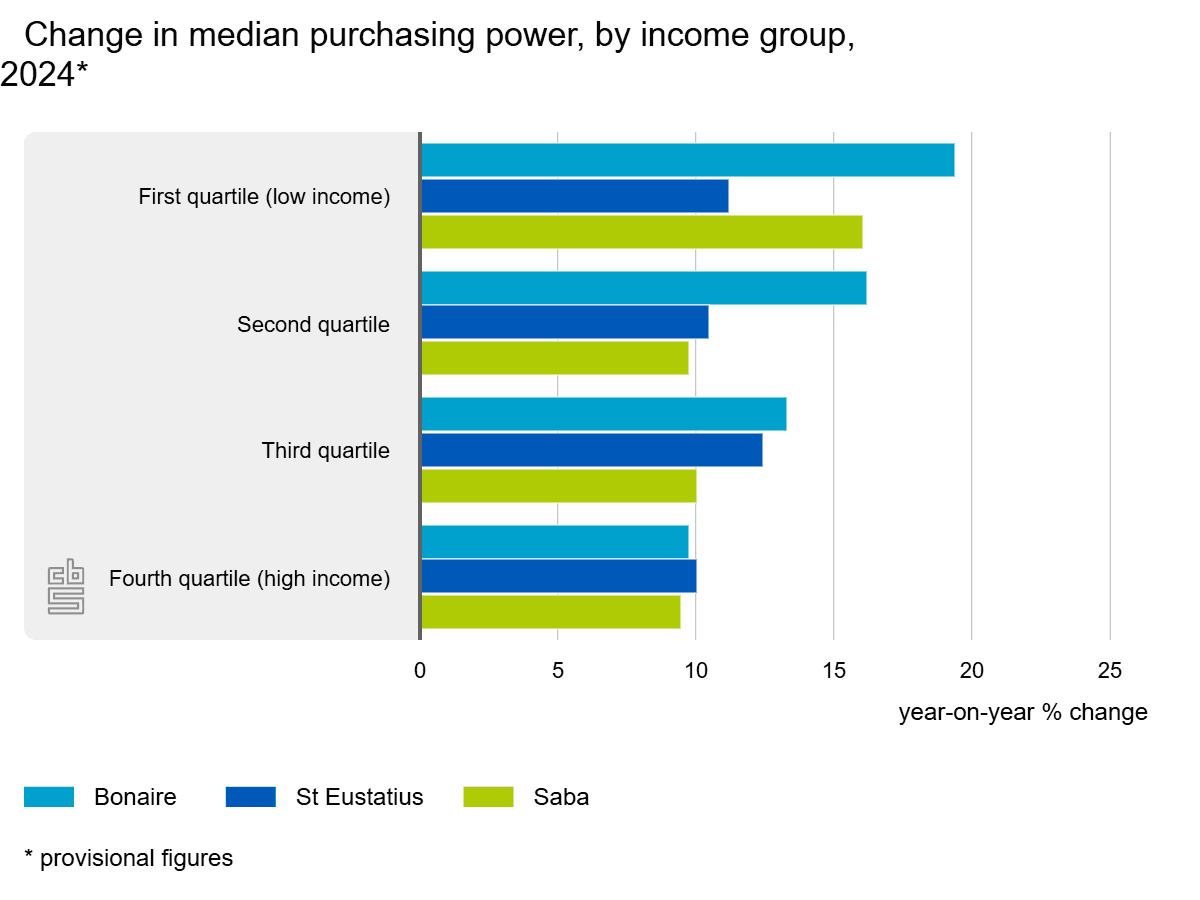
Image: © CBS