
In 2024, 21 percent of residents on Bonaire were living in poverty compared with 32 percent in 2024. On Saba, 27 percent of the population were living in poverty, while on St Eustatius this was 26 percent. In 2023, these shares were 38 percent and 33 percent, respectively. This is according to figures from Statistics Netherlands (CBS), which are compiled on the advice of the Caribbean Netherlands Social Minimum Committee and commissioned by the Ministry of Social Affairs and Employment.
In 2024, poverty among children under the age of 18 was higher than among the population as a whole. Specifically, 29 percent, 35 percent and 32 percent of children on Bonaire, St Eustatius and Saba, respectively, were living in poverty.

Image: © CBS
Measures to improve people’s sense of economic security
Since 2019, the government has taken steps to improve the sense of economic security in the Caribbean Netherlands, by increasing the Statutory Minimum Wage (WML) and social security benefits in 2024. Benefits under the General Old Age Pension (AOV), the General Widows’ and Orphans’ Act (AWW) and income support were also increased. In addition, child benefit was increased and people were able to apply for an energy allowance. These measures have had a noticeable impact on poverty in the Caribbean Netherlands.
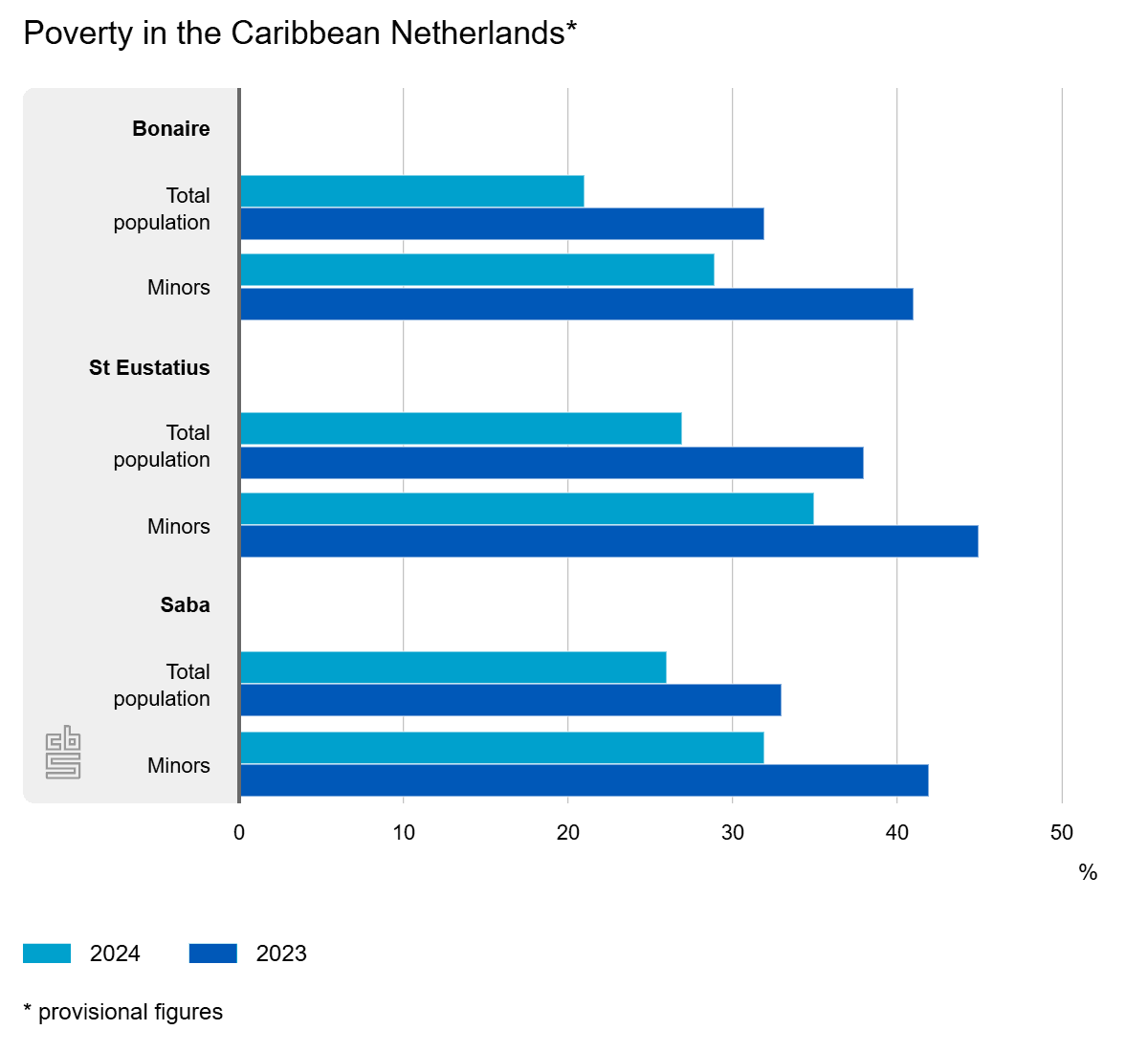
Image: © CBS
Relatively high levels of poverty among recipients of benefit
People in households reliant on benefits as their main source of income are relatively more likely to be living in poverty. On St Eustatius and Saba, 53 percent of benefit recipients were living in poverty in 2024. In 2023, these shares were 76 percent on St Eustatius and 62 percent on Saba. On Bonaire, this was 43 percent, compared with 61 percent in 2023.
Poverty among the working people was lower. In 2024, 18 percent, 22 percent and 22 percent of the people in work on Bonaire, St Eustatius and Saba, respectively, were living in poverty: this too was lower than it was in 2023.
Most people living in poverty are in paid work
Although poverty is relatively common among recipients of benefit, those living in poverty are mainly people in households receiving income from work. In 2024, 75 percent of residents on Bonaire living in poverty earned most of their income from work, compared with 79 percent in 2023. 73 percent of people living in poverty on St Eustatius and 78 percent on Saba were in paid work: slightly more than in 2023.
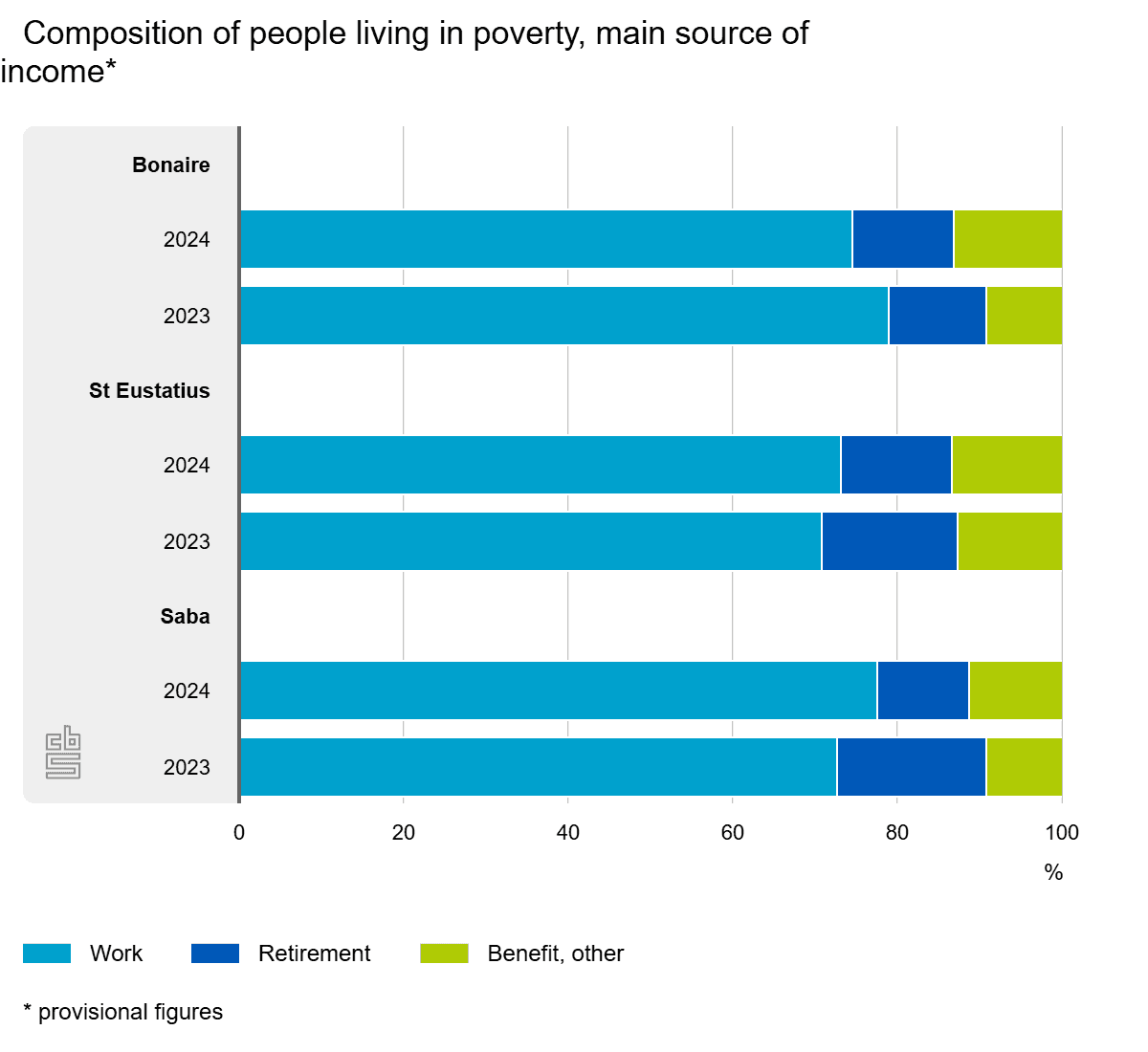
Image: © CBS
29 percent income shortfall among people living in poverty on Bonaire
In 2024, the median income of those living in poverty on Bonaire was 29 percent below the poverty line. This means that half of those living in poverty at that time were over 29 percent below the poverty line. On St Eustatius and Saba, this income shortfall - or the intensity of poverty ¬- was 34 percent and 23 percent, respectively.
A decline in poverty does not necessarily mean a decline in the income shortfall. On St Eustatius, the income shortfall hardly changed compared with 2023, unlike on Saba, where it declined.
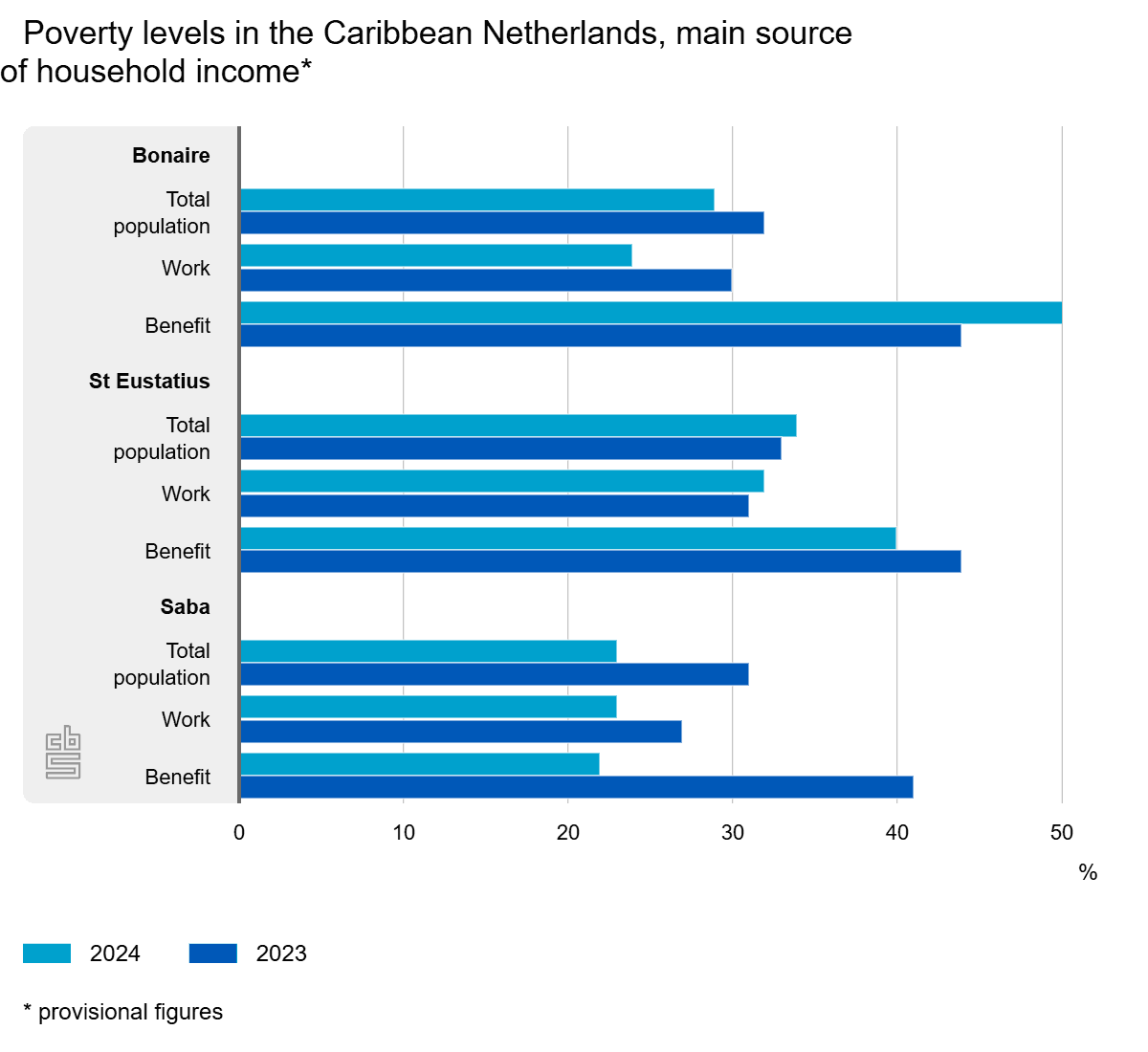
Image: © CBS
Over 10 percent of residents in the Caribbean Netherlands have an income of just above the poverty line
In 2024, an additional 11 percent of residents on Bonaire and St Eustatius were living on an income of up to 25 percent above the poverty line. On Saba, this share was 13 percent. On Bonaire and St Eustatius, the group of those living just above the poverty line was smaller than it was in 2023.
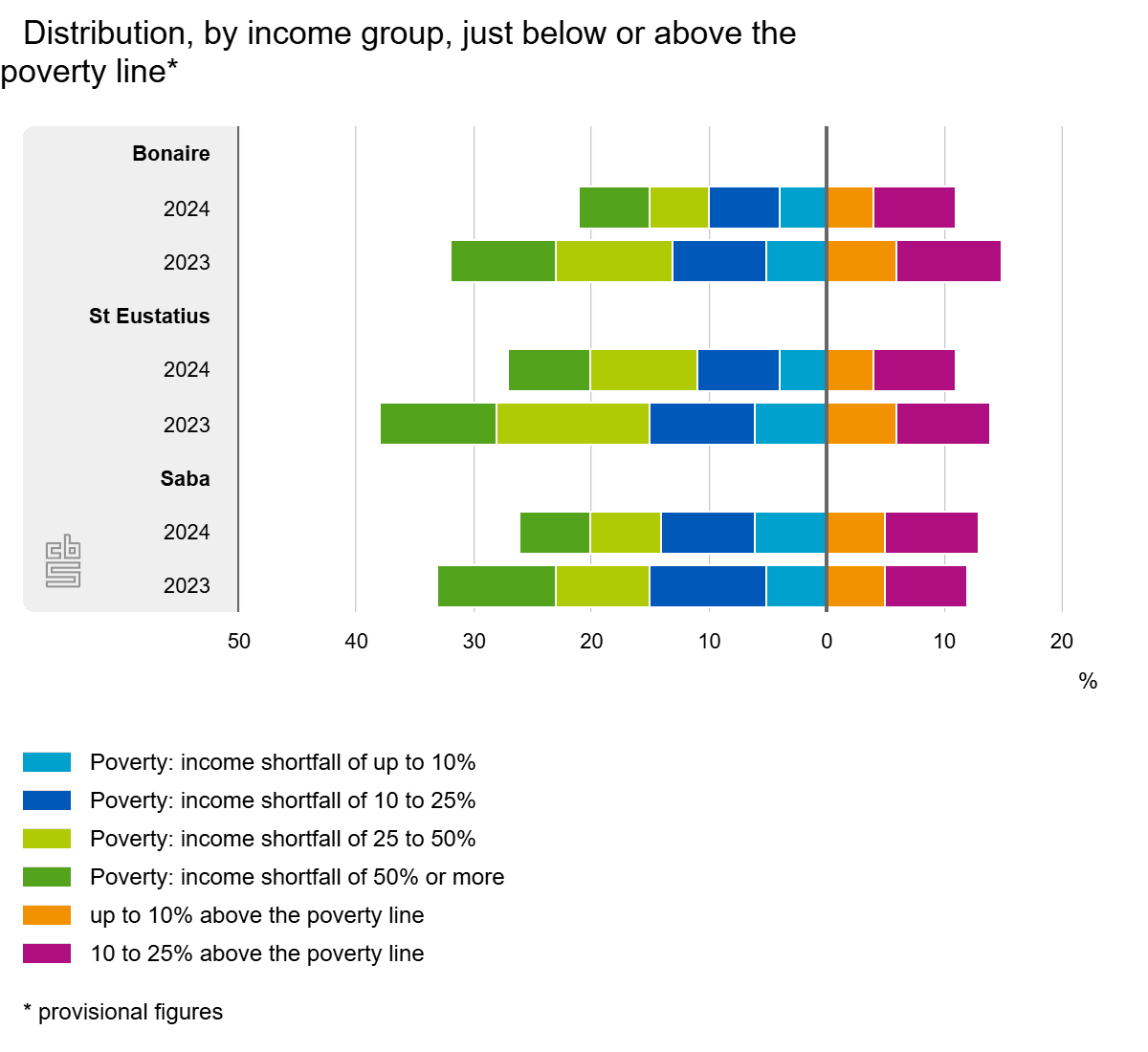
Image: © CBS