
BONAIRE, 22 October 2026 – How can the immigration chain in the Caribbean Netherlands cooperate better, work smarter and deploy new technology responsibly? Those questions were the focus today of the annual Caribbean Netherlands immigration chain mini conference on Bonaire. Representatives of the organisations involved looked back on the development of the chain, discussed the current cooperation and explored opportunities to further strengthen the joint performance of tasks.
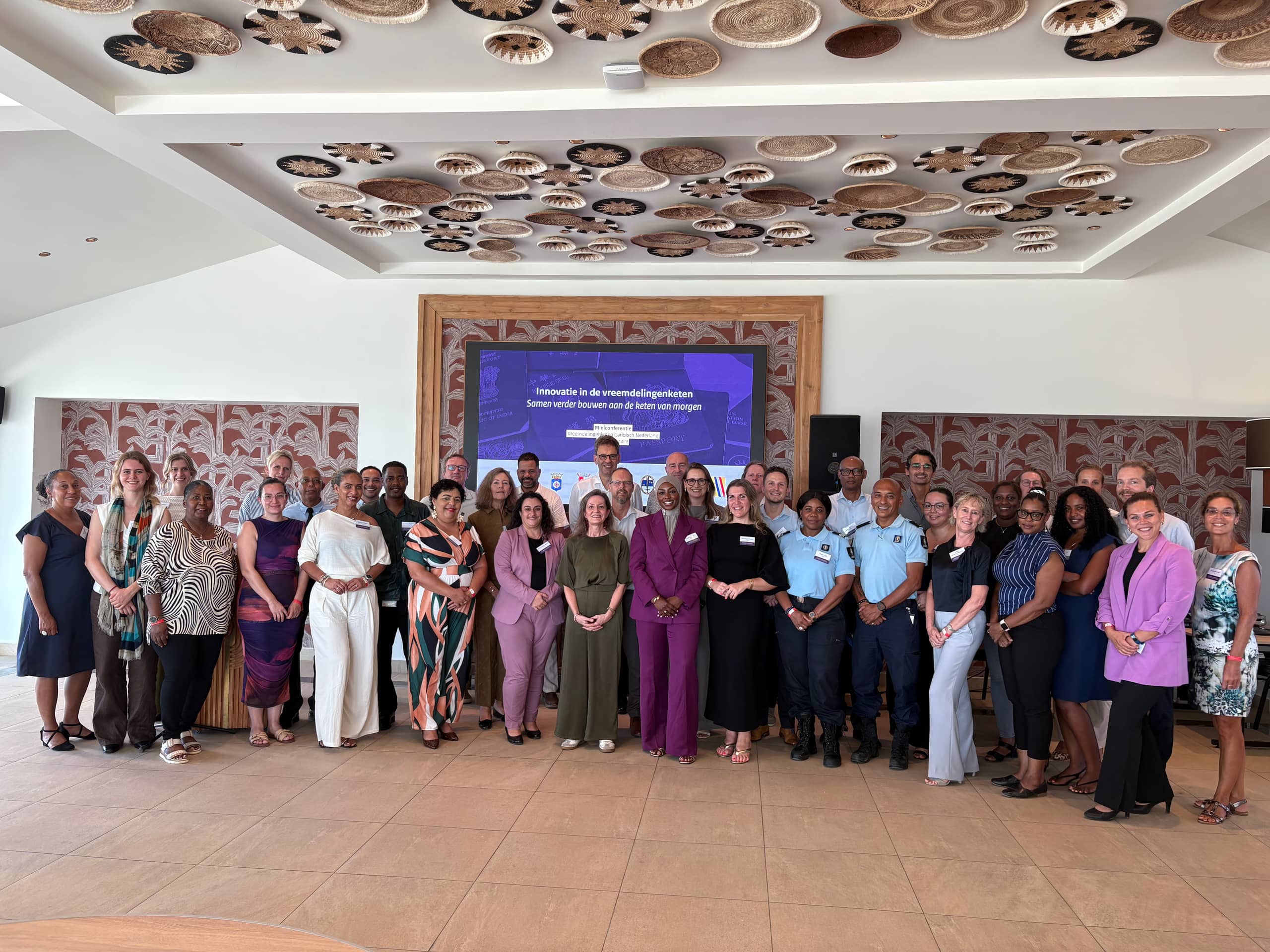
Director-General of the Migration Chain Esther Pijs and Island Governor John Soliano were also present as speakers. The mini conference was devoted to looking ahead with attention to the past, by reflecting on the launch of the immigration chain in the Caribbean Netherlands on 10-10-10. In this context, attention was given to new ways of cooperating, the possible deployment of external parties and the opportunities that technological developments offer for the day-to-day practice of the immigration chain.
From a shared history to a future-oriented chain
During the meeting, the development of the immigration chain in the Caribbean Netherlands was reviewed, including with reference to the theme ‘Moving Forward Together’ from the 2025 mini conference. The progress of the actions formulated during previous meetings was also discussed.
With the presentation ‘From 10-10-10 to Tomorrow’, the participants looked at the development of the chain since 10 October 2010, the current state of affairs and the challenges for the future. Contributions from, among others, Jonathan Johnson, the former Island Governor of Saba, Statistics Netherlands and the Ministry of Justice and Security provided starting points for further exploring the shared challenges.
Innovation as an opportunity for implementation
Innovation also received particular attention. Guest speakers from the Immigration and Naturalisation Service (IND) and the SBIR Programme addressed developments concerning artificial intelligence (AI) and chat functionalities in work processes.
The participants also discussed the possible application of new technologies, such as AI, drones, algorithms and biometric identification. The central question was how these developments can contribute to more effective work processes and better performance of the joint tasks.
Cooperating across organisational boundaries
In interactive breakout sessions, the participants held discussions with one another on three themes: new ways of working and integrated partnerships, the deployment of external private parties, and the application of new technologies.
In this way, it was explored how more intensive exchange of information and other forms of cooperation can strengthen the chain. The participants also discussed opportunities to involve external organisations, such as civil-society organisations or private service providers, in specific work processes. The sessions provided scope to exchange experiences, explore opportunities and formulate ideas for the further development of cooperation in the Caribbean Netherlands.
Continuing to build together
The mini conference emphasised the importance of a shared view of the future. The challenges within the immigration chain call for good coordination, clear cooperation and a willingness to explore new possibilities. The day concluded with a joint review of the outcomes of the meeting.
Through the annual mini conference, the organisations involved continue to work towards an aliens chain in which cooperation, knowledge sharing and innovation contribute to the effective performance of the joint tasks in the Caribbean Netherlands.
This year, the conference was organised on Bonaire by the Repatriation and Departure Service, the Royal Netherlands Marechaussee, IND CN and the Migration Policy Department of the Ministry of Justice and Security.