
The National Coordinator against Discrimination and Racism (NCDR) reflects with great satisfaction and gratitude on the successful conference “Bridging Distances, Redefining Equality”. The event brought together representatives from the European and Caribbean Netherlands and marked a crucial step in bridging the geographical and social distances within the Kingdom.
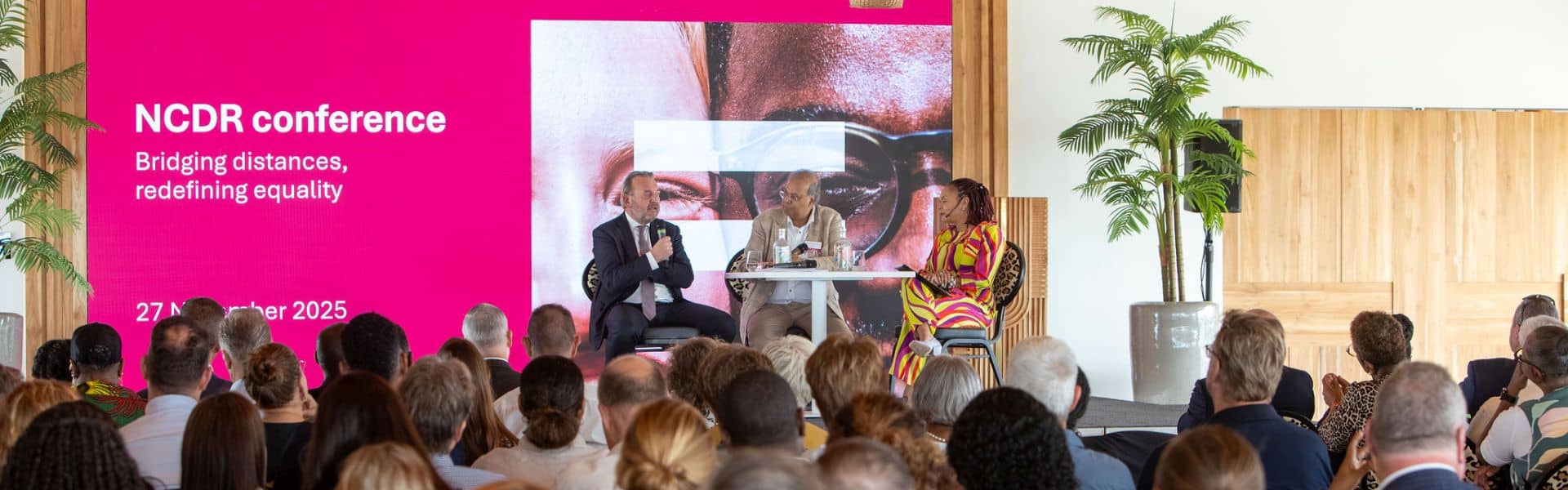
Image: ©NCDR
The National Coordinator against Discrimination and Racism (NCDR) held its annual autumn conference at the Van der Valk Plaza Hotel on Bonaire under the title “Bridging Distances, Redefining Equality – Towards a Shared Future”. The meeting brought together policymakers, administrators, civil society organisations and residents from both the Caribbean Netherlands and the European Netherlands for an in-depth exploration of the structural inequalities within the Kingdom.
Various plenary and thematic sessions addressed topics such as livelihood security, education, healthcare, connectivity and infrastructure. It was widely recognised that the inequalities experienced by the inhabitants of the islands are not incidental, but the result of historical relationships and long-term administrative choices. As the National Ombudsman, Reinier van Zutphen, put it so clearly: ‘Equal, not equivalent. I've had enough of comply or explain. It's simply comply!’
During the conference, it became clear that many of the challenges on the islands reinforce each other. Challenges such as limited educational opportunities, inadequate healthcare, poverty, limited economic opportunities and insufficient infrastructure were explicitly mentioned. Those present emphasised that these problems cannot be addressed separately but require an integrated approach in which policy areas are better coordinated. Improving the physical and social connection between the islands and the European Netherlands was considered a crucial prerequisite. A prerequisite from both sides, as DG Arne van Hout eloquently put it: ‘It is our responsibility to bridge the differences.’
An important outcome of the conference was the joint call for the development of integrated policy agendas linking education, healthcare, infrastructure and socio-economic development. In addition, the importance of the voice of residents and local organisations was underlined. Policymaking must take place in close cooperation with the community and not be imposed. It was also indicated that investments in infrastructure, including transport, digital connectivity and logistics facilities, are necessary to increase opportunities and combat exclusion. For education, additional measures were proposed to improve progression opportunities and better support multilingualism. Regarding healthcare, there were calls for improved access to specialist care and support for complex care needs.
The conference made it clear that the role of the NCDR is essential as a connecting factor between government, organisations and residents. The NCDR will continue to gather signals, put them on the agenda and translate them into policy, thereby remaining an important driver of structural change. The urgency was widely shared during the conference: the existing inequalities are deep-rooted and have a direct impact on the daily lives of many residents. Those present expressed their desire for the measures discussed to be effectively developed and translated into tangible steps in the coming period.